What better way to Bank holiday than buy books. But you gotta hurry.
Verso Books – half-price sale.
ARTHUR C. CLARKE AWARD SHORTLIST available for £1.99.
Enjoy.
What better way to Bank holiday than buy books. But you gotta hurry.
Verso Books – half-price sale.
ARTHUR C. CLARKE AWARD SHORTLIST available for £1.99.
Enjoy.
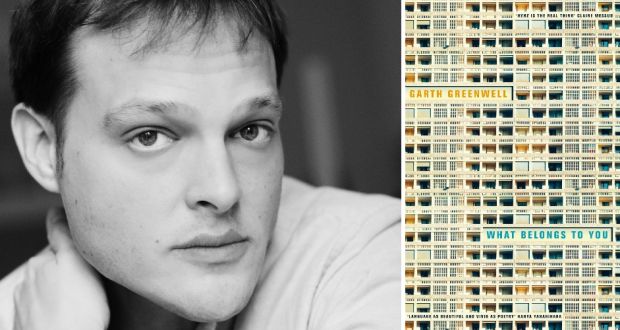
This week my interview with literary sensation Garth Greenwell appeared in The Irish Times. Here’s a taster.
Garth Greenwell and I had connected online before he and his debut novel, What Belongs to You, crossed the Atlantic. He had read my novel and I was excited about his as it was being hailed as a masterpiece by Edmund White and every major outlet in the US seemed to have fallen under its spell. It has received the same ecstatic reception in Britain, with the Daily Telegraph calling it “an essential work of our time”. I got to meet Garth on his brief trip to the UK and on London’s South Bank we talked about writing. This is a lightly edited version of that conversation.
Garth Greenwell and I had connected online before he and his debut novel, What Belongs to You, crossed the Atlantic. He had read my novel and I was excited about his as it was being hailed as a masterpiece by Edmund White and every major outlet in the US seemed to have fallen under its spell. It has received the same ecstatic reception in Britain, with the Daily Telegraph calling it “an essential work of our time”. I got to meet Garth on his brief trip to the UK and on London’s South Bank we talked about writing. This is a lightly edited version of that conversation.
What Belongs to You started off as a novella, which won the Miami University Press Novella Prize.
Yes, it was a publication prize. There are very few places that publish novellas as standalone books. When I wrote Mitko, it was the first piece of fiction I’d ever written; before that I’d only ever written poems. When I finished it, I thought that the story was done, as it tells a complete arc. I thought it was finished but it’s what’s now the first section of What Belongs to You.
Happily, between submitting to the Miami Prize, winning and signing the contract for publication, I realised that Mitko was part of something larger, that there would be more to come, and so I was able to make sure that would be possible with Miami University Press.
Can you pinpoint the moment you realised it was meant to be a longer piece? Was it a wake-up-in-the-middle-of-the-night experience?
I think at every point in writing the book I was completely in the dark about what it was going to be. I feel like it’s a book I wrote not just sentence by sentence but really clause by clause.
After finishing Mitko I didn’t think I was going to write more prose for a while, I thought I had some poems to write. And then one day I just started hearing this very importunate and angry voice. It just took me over. I wrote the second section of the book very fast, in a white heat. And it wasn’t until I was deep into that section that I realised it was connected somehow to Mitko. Even though the character Mitko doesn’t appear anywhere in that second section, I understood that it was the same narrator and that somehow the story that voice was telling was in resonance with the story of Mitko.
You said you wrote What Belongs to You clause by clause, which is how I imagine a poet writes/thinks. Do you think being a poet has helped bring something different to your novel?
To read Garth’s answer and the rest of the interview, head over to The Irish Times.

Here’s your lucky chance to come along to Lucy Caldwell’s launch of her debut short story collection Multitudes. Here’s a little more about Lucy – it’s pretty amazing.
“Lucy Caldwell is the author of three novels and several stage plays & radio dramas.
Awards include the Rooney Prize for Irish Literature, the Dylan Thomas Prize, the George Devine Award for Most Promising Playwright, the BBC Stewart Parker Award, the Susan Smith Blackburn Award, the Imison Award, a Fiction Uncovered Award and a Major Individual Artist Award from the Arts Council of Northern Ireland.
Her most recent novel, All the Beggars Riding, was chosen for Belfast’s One City One Book campaign in 2013 and shortlisted for the Kerry Group Irish Novel of the Year.
Her debut play, Leaves, premiered at Druid Theatre’s Chapel Lane and the Royal Court Upstairs in 2007. Subsequent plays include Guardians and Notes to Future Self, and she is currently working on a version of Chekhov’s Three Sisters set in 1990s Belfast.
She was shortlisted for the 2012 BBC International Short Story Award for her short story ‘Escape Routes’ and won the Commonwealth Writers’ Award (Canada & Europe) in 2014 with ‘Killing Time’.”
If love short stories and you’d like to come along write to the email on the invite.
![Multitdues_invite1 [371329] [382252]](https://paulmcveighwriter.com/wp-content/uploads/2016/04/multitdues_invite1-371329-382252.jpg?w=676)

The Good Son has made The Authors’ Club Best First Novel Award 2016 shortlist. I am very excited – and honoured to be among such great company.
“At a lunch last week, members of the Authors Club met to debate the shortlist of this year’s award – always a lively occasion. This year’s discussion was brisk and amicable. Some titles could be discarded quickly, having just squeaked on to the longlist in the first place. Others died harder. Here’s the list, with some commentary to follow.”
Authors Club Best First Novel Award 2016: The Shortlist
Jakob’s Colours by Lindsay Hawdon (Hodder)
The Last Pilot by Benjamin Johncock (Myriad Editions)
The Good Son by Paul McVeigh (Salt)
The Watchmaker of Filigree Street by Natasha Pulley (Bloomsbury Circus)
Belonging by Uma Sinha (Myriad Editions)
Rawblood by Catriona Ward (Weidenfeld)
The winner will be announced on June 7. Wish me luck.
I’m at Triskel Arts Centre as part of Cork World Book Festival today. I’m interviewing stand up comic Maeve Higgins who has just been in ‘Inside Amy Schumer’ in the States. Come along if you’re about – she’s hilarious.

Comedienne Maeve Higgins – in conversation with Belfast writer Paul McVeigh.
Cork native Maeve Higgins’ book Off you go – Away from home and loving it. Sort of. charts her move to the Big Apple. She will discuss the move, the book, and everything else besides with writer Paul McVeigh who is himself no stranger to comedy and whose book The Good Son was launched at the Festival in 2015.
Maeve Higgins used to think she’d live in Ireland forever. Then the stunning and humble comedienne switched to almonds, gave away all of her possessions and left Ireland with just a carry-on bag filled to the brim with a positive attitude. New York has been kind to our Celtic princess and she’s ready to return the favour, by making friends with as many weirdos as possible and writing about it.
Venue: Triskel Arts Centre.
Date: Saturday 23 April.Time: 4:00pm
I delighted to say the The Good Son has been chosen out of 160 books to be 1 of 12 that will take part in The UK-Russia Year of Language and Literature 2016. It was announced yesterday at the London Book Fair. An extract of the novel has been translated into Russian and will be showcased in Moscow where the extracts will form the basis of a competition for English literary translators in Russia. This will be awarded on the UK pavilion at Russia’s annual 18th Non/Fiction book fair in Moscow this November. Thanks to The British Council and The Literary Platform.
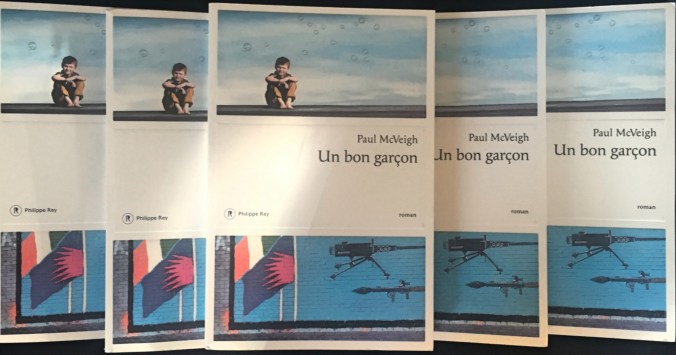
How apt this should happen during my translation week where I’ve been putting translations of my stories on my site in celebration of The Good Son coming out in France – Un bon garçon (for the chance to win a copy see here). Read more about the initiative below of visit the website.

Read more on The Literary Platform site too. The twelve selected books are:
Andrew Michael Hurley, The Loney (John Murray)
Bernardine Evaristo, Mr Loverman (Hamish Hamilton)
Claire Fuller, Our Endless Numbered Days (Fig Tree)
Cynan Jones, The Dig (Granta)
Jackie Kay, Red Dust Road (Picador)
Laline Paull, The Bees (4th Estate)
Laurence Scott, The Four-Dimensional Human (William Heinemann)
Louise Welsh, A Lovely Way to Burn (John Murray)
Marion Coutts, The Iceberg: A Memoir (Atlantic Books)
Patrick Barkham, Coastlines (Granta)
Paul McVeigh, The Good Son (Salt)
Sunjeev Sahota, The Year of the Runaways (Picador)
“In spring 2016, the British Council will hold an open competition for the best translation of works by contemporary British writers. Competition entrants will be presented with the first chapters of 12 works written by contemporary British authors. The authors of the best translations will receive a cash prize. Both amateur and professional translators are invited to take part in the competition. An expert panel will judge the work of participants, including contributors to literary journals, critics, editors and recognised specialists of literary translation. The translations of the competition winners will be published online and also in one of the Russian periodicals.
The competition will be held with the aim of presenting the best translations of works by contemporary British writers to Russian publishers. The project will increase publishers’ and translators’ interest in contemporary British literature, presenting new writers to Russian audiences and also helping to continue a professional dialogue between publishers in the UK and in Russia.”
Best First Novel Award Longlist 2016
The Authors Club is pleased to announce that the longlist for the 2016 award is as follows:
Jakob’s Colours by Lindsay Hawdon (Hodder)
The Loney by Andrew Hurley (John Murray)
The Last Pilot by Benjamin Johncock (Myriad Editions)
The Speaker’s Wife by Quentin Letts (Constable)
The Gracekeepers by Kirsty Logan (Harvill Secker)
The Good Son by Paul McVeigh (Salt)
The Watchmaker of Filigree St by Natasha Pulley (Bloomsbury Circus)
The House at the Edge of the World by Julia Rochester (Viking)
The Last Days of Disco by David F Ross (Orenda)
Belonging by Uma Sinha (Myriad Editions)
Mainlander by Will Smith (4th Estate)
Rawblood by Catriona Ward (Weidenfeld)
The prize is for the debut novel of a British, Irish or UK-based author, first published in the UK, and there is no age limit. This is the 62nd year of the prize.
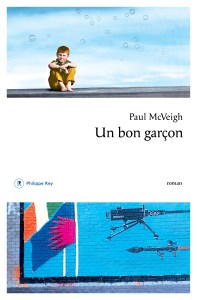
To celebrate the release of the French translation of The Good Son (Un bon garçon translated by Florence Levy-Paoloni) I’ve collated translations of my short stories and flash fictions for you to read. To win a copy of Un bon garçon read here.
I’m starting today with the Polish translation of My Aunt Maggie (Ciocia Maggie) originally published in The Stinging Fly 2014. I’ll post Spanish and Polish translations.
Dig – originally published in Unbraiding the short story in 2014. I’ll post Polish, Spanish and (soon) Turkish translations.

Tickles – commissioned by BBC Radio 4, airing in March 2014. It appeared in print inThe London Magazine April 2016. I’ll post the Polish translation.


I’ve received my copies of the French translation of The Good Son – Un Bon Garçon. To celebrate having my first translated book in my hands I’m…
…linking to a sample of Un Bon Garçon online
…publishing Spanish and Polish translations of some of flash fictions and short stories over the next few days
…giving away one of these precious copies of Un Bon Garçon – just add a amount below or share online – I have eyes everywhere!
…and, below, for fun, a short section from The Good Son were Mickey meets his first French man and shows his extensive knowledge of the French language. He’s just arrived at his school which has been taken over by a ‘summer scheme’ for kids during the holidays. Bigfoot is the community leader sorting out what the kids are doing that day.
***
‘There’s only room for ten in the minibus. Stand over by the main doors and Pierre will choose who can go,’ says Bigfoot.
Pierre. A foreign one. I remember last year. They come to help out at the Summer Scheme. People think they’re mad cuz they’re always smilin’ and happy. I think they’re mad cuz who in their right mind would want to come here? You’d have to be mental, definitely.
I have to go on this trip. I can find out where he’s from and run away to his house if it’s really bad in St. Gabriel’s.
We’re all crowded round Pierre. ‘Me!’ Everyone bounces up and down, arms in the air. No girls at all.
‘Yes.’ He points his magic, wish-grantin’, foreign finger, ‘Yes, 3, 4, you, you, 7, 8, 9. One more . . .’
‘Me, Pierre, me!’ I scream his name like I’ve heard it on the TV.
He laughs. ‘You speak French?’
‘Bibliotheque!’ I shout. It means library. I remember it because I imagined Jesus jivin’ at the disco.
Some of the boys hate me, but they’re just dead jealous. Pierre taps me on the head. He picked me! Nobody ever picks me for nothin’.
‘And what eeze your name?’ Pierre asks me.
‘Mickey.’
‘Bonjour, Mickey.’
‘Bonjour, Pierre.’
He laughs. I love him so much. We’re best friends already. He’s the coolest teacher I’ve ever had.
***