The Word Factory round up from my blog is here. Articles on writing, some wonderful short stories to read, open submissions to literary journals and competitions and so much more.
The Word Factory round up from my blog is here. Articles on writing, some wonderful short stories to read, open submissions to literary journals and competitions and so much more.
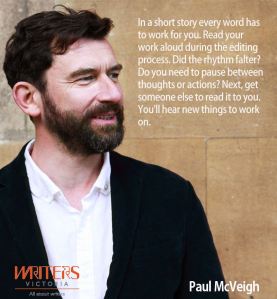 ‘That Killer First Page’ – my class on that crucial short story opening, goes to Lancaster on May 7th. You’ll find out what competition judges and journal editors look for in a short story and how to avoid the rejection pile.
That Killer First Page
You’ll find out what competition judges and journal editors look for in a short story and how to avoid the rejection pile. You’ll write a short piece and get feedback on that crucial story opening. In a form where every word counts, get tips on staying focused on your story and where to start the action. You’ll also look at submission opportunities; how to find them and where you should be sending your stories.
About Paul
Paul McVeigh’s debut novel ‘The Good Son’ is currently Brighton’s City Reads and was shortlisted for The Guardian’s ‘Not the Booker Prize’. His short fiction has been published in journals and anthologies and been commissioned by BBC Radio 4. He has read his work for BBC Radio 5, the International Conference on the Short Story in Vienna, Belfast Book Festival, Wroclaw Short Story Festival and Cork International Short Story Festival the last 2 years. He has represented short stories in the UK for The British Council in Mexico and Turkey.
Paul’s short story blog shares writing opportunities and advice has had over 1 million hits. He’s interviewed short story masters like Kevin Barry, Elizabeth McCrackin and George Saunders. Paul is co-founder of London Short Story Festival and Associate Director at Word Factory, the UK’s leading short story literary salon. He is also been a reader and judge for national and international short story competitions. Completely Novel says that Paul is one of the 8 resources that will help you write a prize-winning short story.
Reviews for his writing:
“Heartbreaking..gripping” The Guardian
“A work of genius.” Pulizter Prize-winning short story writer Robert Olen Butler.
“Absolutely loved it.” Jackie Kay
“Beautiful and very moving.” Booker shortlisted Alison Moore
“Its such a clever story, gentle, poignant, emotionally straight as a dart.” Vanessa Gebbie
“(one of) Ireland’s most exciting and talented writers. Incredibly moving; poignant but utterly real, funny and beautifully observant.” BBC Radio 4
“Paul McVeigh’s story stands out. Funny, moving, poignant. Brilliant.” Metro Newspaper
Comments for this class:
“Practical, insightful application of knowledge to writing.”
“Fantastic! Practical, targeted advice like this is wonderful!”
“This was my fav course yet! Informative, entertaining, and engaging. Hard to beat!”
Places are limited to 20. For unwaged discount please email paulmcveighwriter@live.co.uk
I was commissioned to write a short story by Radio 4 which aired in March 2014. It was a pivotal moment for me. You can read more about the process of being commissioned here. The story ‘Tickles’ was never published – until now. You can read it by buying the current issue of The London Magazine or by becoming a subscriber.
Here’s more about this legendary magazine…
The London Magazine is England’s oldest literary periodical, with a history stretching back to 1732. Today – reinvigorated for a new century – the Magazine’s essence remains unchanged: it is a home for the best writing, and an indispensable feature on the British literary landscape.
Across a long life – spanning several incarnations – the pages of the Magazine have played host to a wide range of canonical writers, from Percy Bysshe Shelley, William Hazlitt and John Keats in the 18th-century, to T.S. Eliot, W.H. Auden and Evelyn Waugh in the early 20th-century. Meanwhile, in recent decades the Magazine has published work by giants of contemporary fiction and poetry such as William Boyd, Nadine Gordimer, and Derek Walcott.

The London Magazine was founded in 1732 as The London Magazine, or Gentleman’s Monthly Intelligencer, a rival to the new, and popular, Gentleman’s Magazine.
Revived in 1820 by a new editor, John Scott, the Magazine went on to publish work by the leaders of a rising generation of English romantics. In September 1821, the first two instalments of Thomas De Quincey’s Confessions of an English Opium Eater appeared in the Magazine. Charles Lamb, Leigh Hunt, and Thomas Carlyle were also contributors.
John Scott died in a duel in 1821. He was shot in the stomach by an associate of John Gibson Lockhart, editor of Blackwood’s Magazine: his death was the culmination of a long rivalry between the two. Publication ceased in 1829.
The magazine restarted in 1898 under the ownership of the Harmsworth brothers, famous for starting the Daily Mail in 1896 and the Daily Mirror in 1903. Editorship was given to younger brother Cecil, who embraced the undertaking with gusto. In February 1903, H. G. Wells published his first short story for the Magazine, Mr Skelmersdale in Fairyland. In the following years he was included in the publication several more times, including an article specially commissioned by Harmsworth in 1908, entitled The Things that Live on Mars. During the early twentieth century The London Magazine also published original stories from the likes of Arthur Conan Doyle, Joseph Conrad, Jack London, and P. G. Wodehouse. A short story by E. Nesbit was included in almost every issue of 1904, and her most famous novel, The Railway Children, was serialised in the magazine the year before its commercial release in 1906. Thomas Hardy was also published in the Magazine, and famous illustrator W. Heath Robinson contributed several original prints. In 1933 the Magazine closed again.
In 1954 editor and writer John Lehmann founded the most recent incarnation of The London Magazine: it has been published continuously since. In the first issue, T. S. Eliot recommended to readers “a magazine that will boldly assume the existence of a public interested in serious literature…”. Louis MacNeice published his Canto In Memoriam Dylan Thomas, and Henry Green reviewed the diaries of Virginia Woolf.
Under Lehmann, and subsequent editors Alan Ross (who became editor in 1961), and Sebastian Barker (2001), the Magazine became a pole star in the London literary firmament, developing a reputation for publishing the best and most interesting fiction, poetry, criticism and essays from England and across the world, and for helping to bring a new of a generation of young English writers to public attention. The work of a vast array of towering twentieth-century figures found a home among its pages, including William Burroughs, Harold Pinter,Ted Hughes, Sylvia Plath, Les Murray, and Paul Muldoon.
Now, The London Magazine is re-launched under the editorship of Steven O’Brien. Here is a magazine re-invigorated for the twenty-first-century, which – just like the city from which it takes its name – combines a rich history with a fiercely contemporary outlook, and which draws together ideas, and voices, from across the globe.
Eclectic in taste, promiscuously interested and unapologetically intelligent, The London Magazine continues to publish the best writing from London and the wider world.
Published six times a year, the Magazine is unmissable reading for anyone with an interest in literature, culture and ideas.
Join a conversation that has endured for 300 years: subscribe today.
Head over to Retreat West site for a chance to win a free place on a writing retreat June 17th to 21st. I’ll be teaching for the weekend alongside other tutors.
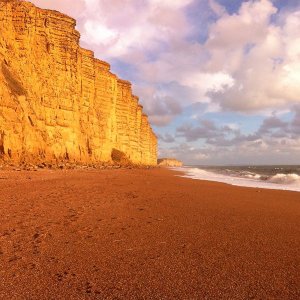
It’s a beauty
This is the amazing location on Chesil Beach, also home to the stunning cliffs pictured above. Check out the competition and hopefully see you there.
Deadline April 10th.
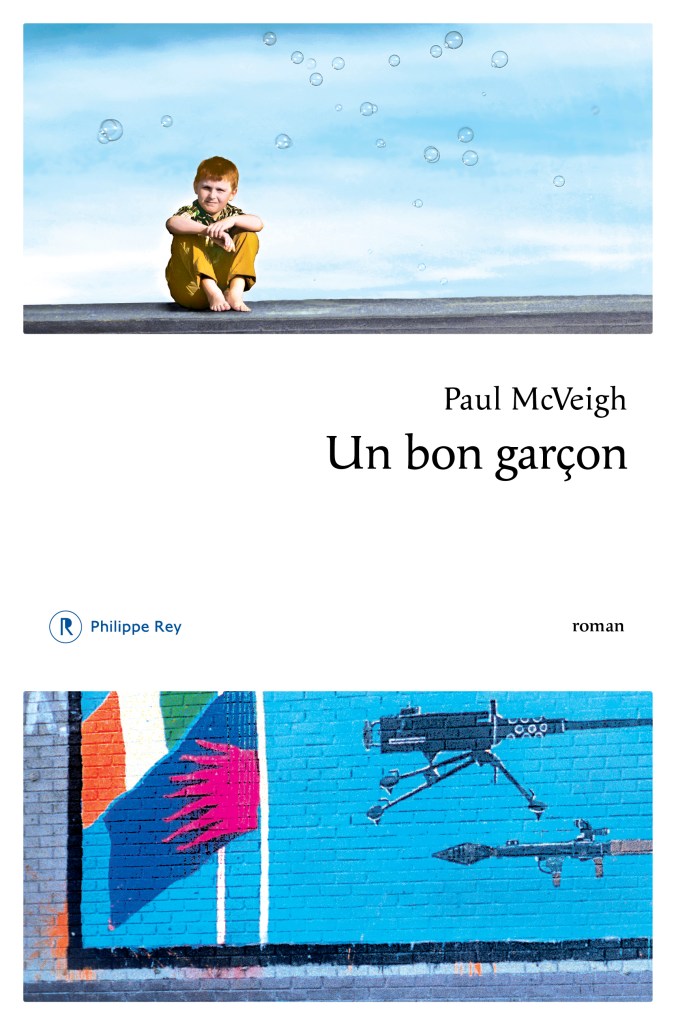
‘Un bon garçon’ gets first reviews in France. Here’s one in Terrafemina. I think they liked it.
“Un bon garçon” de Paul McVeigh : le roman rafraîchissant de ce printemps
There’s an interview with me over on The Bath Short Story Award site.
It’s a slightly updated version of an interview we did last year. We talk about short stories – titles, beginnings, and endings. I hope you like it.
You might consider entering this year’s competition yourself.

Happy St Patrick’s Day! I hope you have a good one. I’ll be spending tonight celebrating at the sold out City Reads event – it’s going to be fun.
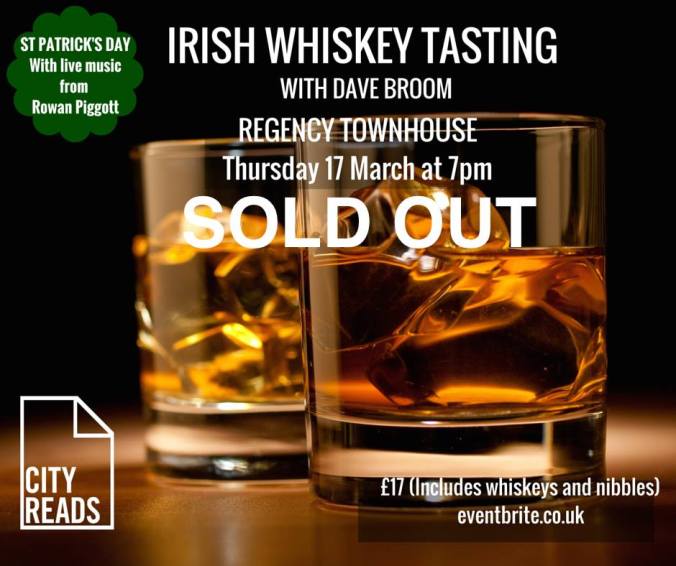
If you fancy hearing an Irish accent on St Patrick’s Day…
I spent the afternoon on the ‘What’s The Craic’ show on Radio Reverb. It was a great chat about the process of writing The Good Son and the issues in the novel.
I also chose a couple of songs. I hope you like it.

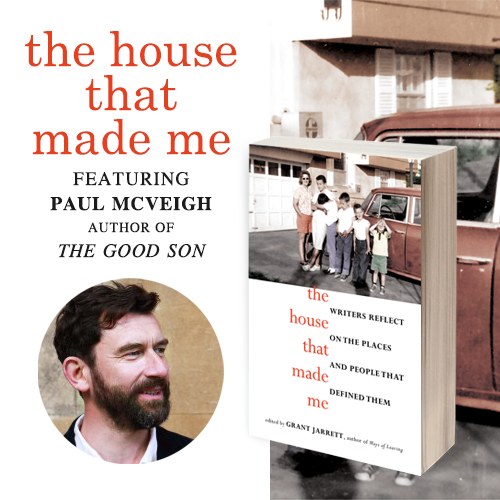
Book Giveaway For The House That Made Me: Writers Reflect on the Places and People That Defined Them
In the US? Head over to Goodreads and you could win a copy of this book filled with essays from authors around the world – including me.
Giveaway ends in:20 days and 19:55:47
Availability:10 copies available, 175 people requesting
Giveaway dates:Feb 23 – Apr 05, 2016
Countries available:US
I really enjoyed talking about The Good Son and City Reads on Latest TV.
The Word Factory round-up of submission opportunities to journals and competitions, articles on writing and writing news is here. Taken from my blog, this monthly list is all you need to plan your attack on the publishing world.
Click and – Get Writing! Get Submitting! Get Published!