Shortlisted for The Authors’ Club Best First Novel Award

The Good Son has made The Authors’ Club Best First Novel Award 2016 shortlist. I am very excited – and honoured to be among such great company.

Suzi Feay on her blog says:

“At a lunch last week, members of the Authors Club met to debate the shortlist of this year’s award – always a lively occasion. This year’s discussion was brisk and amicable. Some titles could be discarded quickly, having just squeaked on to the longlist in the first place. Others died harder. Here’s the list, with some commentary to follow.”

Authors Club Best First Novel Award 2016: The Shortlist

Jakob’s Colours by Lindsay Hawdon (Hodder)

The Last Pilot by Benjamin Johncock (Myriad Editions)

The Good Son by Paul McVeigh (Salt)

The Watchmaker of Filigree Street by Natasha Pulley (Bloomsbury Circus)

Belonging by Uma Sinha (Myriad Editions)

Rawblood by Catriona Ward (Weidenfeld)

The winner will be announced on June 7. Wish me luck.


Cork World Book Festival. Sat 23, 4pm

I’m at Triskel Arts Centre as part of Cork World Book Festival today. I’m interviewing stand up comic Maeve Higgins who has just been in ‘Inside Amy Schumer’ in the States. Come along if you’re about – she’s hilarious.

Maeve Higgins – Cork World Book Fest 2016

Comedienne Maeve Higgins – in conversation with Belfast writer Paul McVeigh.

Cork native Maeve Higgins’ book Off you go – Away from home and loving it. Sort of. charts her move to the Big Apple. She will discuss the move, the book, and everything else besides with writer Paul McVeigh who is himself no stranger to comedy and whose book The Good Son was launched at the Festival in 2015.

Maeve Higgins used to think she’d live in Ireland forever. Then the stunning and humble comedienne switched to almonds, gave away all of her possessions and left Ireland with just a carry-on bag filled to the brim with a positive attitude. New York has been kind to our Celtic princess and she’s ready to return the favour, by making friends with as many weirdos as possible and writing about it.

Venue: Triskel Arts Centre.

Date: Saturday 23 April.Time: 4:00pm

Price:€6/5

The UK-Russia Year of Language and Literature 2016

I delighted to say the The Good Son has been chosen out of 160 books to be 1 of 12 that will take part in The UK-Russia Year of Language and Literature 2016. It was announced yesterday at the London Book Fair. An extract of the novel has been translated into Russian and will be showcased in Moscow where the extracts will form the basis of a competition for English literary translators in Russia. This will be awarded on the UK pavilion at Russia’s annual 18th Non/Fiction book fair in Moscow this November. Thanks to The British Council and The Literary Platform.

How apt this should happen during my translation week where I’ve been putting translations of my stories on my site in celebration of The Good Son coming out in France  –  Un bon garçon (for the chance to win a copy  see here). Read more about the initiative below of visit the website.

Russia

Read more on The Literary Platform site too. The twelve selected books are:

Andrew Michael Hurley, The Loney (John Murray)

Bernardine Evaristo, Mr Loverman (Hamish Hamilton)

Claire Fuller, Our Endless Numbered Days (Fig Tree)

Cynan Jones, The Dig (Granta)

Jackie Kay, Red Dust Road (Picador)

Laline Paull, The Bees (4th Estate)

Laurence Scott, The Four-Dimensional Human (William Heinemann)

Louise Welsh, A Lovely Way to Burn (John Murray)

Marion Coutts, The Iceberg: A Memoir (Atlantic Books)

Patrick Barkham, Coastlines (Granta)

Paul McVeigh, The Good Son (Salt)

Sunjeev Sahota, The Year of the Runaways (Picador)

“In spring 2016, the British Council will hold an open competition for the best translation of works by contemporary British writers. Competition entrants will be presented with the first chapters of 12 works written by contemporary British authors. The authors of the best translations will receive a cash prize. Both amateur and professional translators are invited to take part in the competition. An expert panel will judge the work of participants, including contributors to literary journals, critics, editors and recognised specialists of literary translation. The translations of the competition winners will be published online and also in one of the Russian periodicals.

The competition will be held with the aim of presenting the best translations of works by contemporary British writers to Russian publishers. The project will increase publishers’ and translators’ interest in contemporary British literature, presenting new writers to Russian audiences and also helping to continue a professional dialogue between publishers in the UK and in Russia.”

The Good Son Longlisted for The Author Club Best First Novel Award

Best First Novel Award Longlist 2016

The Authors Club is pleased to announce that the longlist for the 2016 award is as follows:

Jakob’s Colours by Lindsay Hawdon (Hodder)
The Loney by Andrew Hurley (John Murray)
The Last Pilot by Benjamin Johncock (Myriad Editions)
The Speaker’s Wife by Quentin Letts (Constable)
The Gracekeepers by Kirsty Logan (Harvill Secker)
The Good Son by Paul McVeigh (Salt)
The Watchmaker of Filigree St by Natasha Pulley (Bloomsbury Circus)
The House at the Edge of the World by Julia Rochester (Viking)
The Last Days of Disco by David F Ross (Orenda)
Belonging by Uma Sinha (Myriad Editions)
Mainlander by Will Smith (4th Estate)
Rawblood by Catriona Ward (Weidenfeld)

The prize is for the debut novel of a British, Irish or UK-based author, first published in the UK, and there is no age limit.  This is the 62nd year of the prize.

Found in Translation

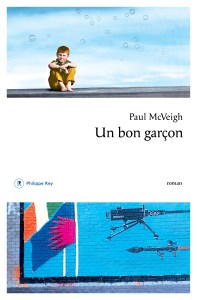
To celebrate the release of the French translation of The Good Son (Un bon garçon translated by Florence Levy-Paoloni) I’ve collated translations of my short stories and flash fictions for you to read. To win a copy of Un bon garçon read here.

PR_Mcveigh_EXE_RVB_300dpi


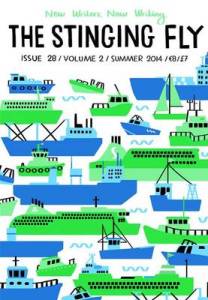
I’m starting today with the Polish translation of My Aunt Maggie (Ciocia Maggie) originally published in The Stinging Fly 2014. I’ll post Spanish and Polish translations.

Stinging Fly me cover

Dig – originally published in Unbraiding the short story in 2014. I’ll post Polish, Spanish and (soon) Turkish translations.

Unbraidng Cover


Tickles – commissioned by BBC Radio 4, airing in March 2014. It appeared in print inThe London Magazine April 2016. I’ll post the Polish translation.

The London Magazine Cover

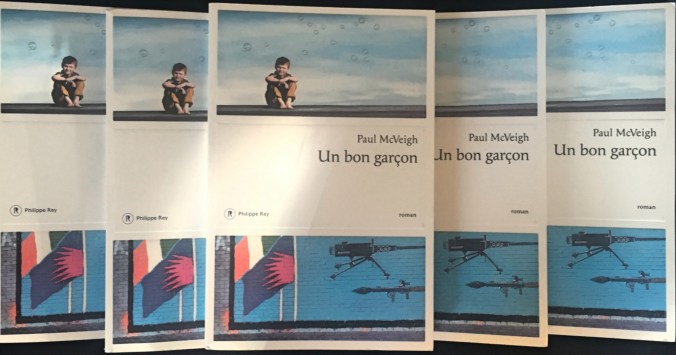
Win a Copy of Un Bon Garçon

Un Bon Garcon 1

I’ve received my  copies of the French translation of The Good Son – Un Bon Garçon. To celebrate having my first translated book in my hands I’m…

…linking to a sample of Un Bon Garçon online

…publishing Spanish and Polish translations of some of flash fictions and short stories over the next few days

…giving away one of these precious copies of Un Bon Garçon – just add a amount below or share online – I have eyes everywhere!

…and, below, for fun, a short section from The Good Son were Mickey meets his first French man and shows his extensive knowledge of the French language. He’s just arrived at his school which has been taken over by a ‘summer scheme’ for kids during the holidays. Bigfoot is the community leader sorting out what the kids are doing that day.

***

‘There’s only room for ten in the minibus. Stand over by the main doors and Pierre will choose who can go,’ says Bigfoot.

Pierre. A foreign one. I remember last year. They come to help out at the Summer Scheme. People think they’re mad cuz they’re always smilin’ and happy. I think they’re mad cuz who in their right mind would want to come here? You’d have to be mental, definitely.

I have to go on this trip. I can find out where he’s from and run away to his house if it’s really bad in St. Gabriel’s.

We’re all crowded round Pierre. ‘Me!’ Everyone bounces up and down, arms in the air. No girls at all.

‘Yes.’ He points his magic, wish-grantin’, foreign finger, ‘Yes, 3, 4, you, you, 7, 8, 9. One more . . .’

‘Me, Pierre, me!’ I scream his name like I’ve heard it on the TV.

He laughs. ‘You speak French?’

‘Bibliotheque!’ I shout. It means library. I remember it because I imagined Jesus jivin’ at the disco.

Some of the boys hate me, but they’re just dead jealous. Pierre taps me on the head. He picked me! Nobody ever picks me for nothin’.

‘And what eeze your name?’ Pierre asks me.

‘Mickey.’

‘Bonjour, Mickey.’

‘Bonjour, Pierre.’

He laughs. I love him so much. We’re best friends already. He’s the coolest teacher I’ve ever had.

***

Un Bon Garcon 4

That Killer First Page – Lancaster May 7th

PaulMcVeigh short story‘That Killer First Page’ – my class on that crucial short story opening, goes to Lancaster on May 7th. You’ll find out what competition judges and journal editors look for in a short story and how to avoid the rejection pile.
 
This class has sold out in Bath, Belfast, Brighton, Cork, London and Melbourne. You can book your tickets here.
Here’s the copy…

That Killer First Page 

You’ll find out what competition judges and journal editors look for in a short story and how to avoid the rejection pile. You’ll write a short piece and get feedback on that crucial story opening. In a form where every word counts, get tips on staying focused on your story and where to start the action. You’ll also look at submission opportunities; how to find them and where you should be sending your stories.

About Paul

Paul McVeigh’s debut novel ‘The Good Son’ is currently Brighton’s City Reads and was shortlisted for The Guardian’s ‘Not the Booker Prize’. His short fiction has been published in journals and anthologies and been commissioned by BBC Radio 4. He has read his work for BBC Radio 5, the International Conference on the Short Story in Vienna, Belfast Book Festival, Wroclaw Short Story Festival and Cork International Short Story Festival the last 2 years. He has represented short stories in the UK for The British Council in Mexico and Turkey.

Paul’s short story blog shares writing opportunities and advice has had over 1 million hits. He’s interviewed short story masters like Kevin Barry, Elizabeth McCrackin and George Saunders. Paul is co-founder of London Short Story Festival and Associate Director at Word Factory, the UK’s leading short story literary salon. He is also been a reader and judge for national and international short story competitions. Completely Novel says that Paul is one of the 8 resources that will help you write a prize-winning short story.

Reviews for his writing:

“Heartbreaking..gripping” The Guardian

“A work of genius.” Pulizter Prize-winning short story writer Robert Olen Butler.

“Absolutely loved it.” Jackie Kay

“Beautiful and very moving.” Booker shortlisted Alison Moore
“Its such a clever story, gentle, poignant, emotionally straight as a dart.” Vanessa Gebbie
“(one of) Ireland’s most exciting and talented writers.  Incredibly moving; poignant but utterly real, funny and beautifully observant.” BBC Radio 4
“Paul McVeigh’s story stands out. Funny, moving, poignant. Brilliant.” Metro Newspaper

Comments for this class:

“Practical, insightful application of knowledge to writing.”
“Fantastic! Practical, targeted advice like this is wonderful!”
“This was my fav course yet! Informative, entertaining, and engaging. Hard to beat!”

Places are limited to 20. For unwaged discount please email paulmcveighwriter@live.co.uk

‘Tickles’ A short story in The London Magazine

I was commissioned to write a short story by Radio 4 which aired in March 2014. It was a pivotal moment for me. You can read more about the process of being commissioned here. The story ‘Tickles’ was never published – until now. You can read it by buying the current issue of The London Magazine or by becoming a subscriber.

Here’s more about this legendary magazine…

The London Magazine is England’s oldest literary periodical, with a history stretching back to 1732. Today – reinvigorated for a new century – the Magazine’s essence remains unchanged: it is a home for the best writing, and an indispensable feature on the British literary landscape.

Across a long life – spanning several incarnations – the pages of the Magazine have played host to a wide range of canonical writers, from Percy Bysshe ShelleyWilliam Hazlitt and John Keats in the 18th-century, to T.S. EliotW.H. Auden and Evelyn Waugh in the early 20th-century. Meanwhile, in recent decades the Magazine has published work by giants of contemporary fiction and poetry such as William BoydNadine Gordimer, and Derek Walcott.

Circlelogo2

The London Magazine was founded in 1732 as The London Magazine, or Gentleman’s Monthly Intelligencer, a rival to the new, and popular, Gentleman’s Magazine.

Revived in 1820 by a new editor, John Scott, the Magazine went on to publish work by the leaders of a rising generation of English romantics. In September 1821, the first two instalments of Thomas De Quincey’s Confessions of an English Opium Eater appeared in the Magazine. Charles LambLeigh Hunt, and Thomas Carlyle were also contributors.

John Scott died in a duel in 1821. He was shot in the stomach by an associate of John Gibson Lockhart, editor of Blackwood’s Magazine: his death was the culmination of a long rivalry between the two. Publication ceased in 1829.

The magazine restarted in 1898 under the ownership of the Harmsworth brothers, famous for starting the Daily Mail in 1896 and the Daily Mirror in 1903. Editorship was given to younger brother Cecil, who embraced the undertaking with gusto. In February 1903, H. G. Wells published his first short story for the Magazine, Mr Skelmersdale in Fairyland. In the following years he was included in the publication several more times, including an article specially commissioned by Harmsworth in 1908, entitled The Things that Live on Mars. During the early twentieth century The London Magazine also published original stories from the likes of Arthur Conan DoyleJoseph Conrad, Jack London, and P. G. Wodehouse. A short story by E. Nesbit was included in almost every issue of 1904, and her most famous novel, The Railway Children, was serialised in the magazine the year before its commercial release in 1906. Thomas Hardy was also published in the Magazine, and famous illustrator W. Heath Robinson contributed several original prints. In 1933 the Magazine closed again.

In 1954 editor and writer John Lehmann founded the most recent incarnation of The London Magazine: it has been published continuously since. In the first issue, T. S.  Eliot recommended to readers “a magazine that will boldly assume the existence of a public interested in serious literature…”. Louis MacNeice published his Canto In Memoriam Dylan Thomas, and Henry Green reviewed the diaries of Virginia Woolf.

Under Lehmann, and subsequent editors Alan Ross (who became editor in 1961), and Sebastian Barker (2001), the Magazine became a pole star in the London literary firmament, developing a reputation for publishing the best and most interesting fiction, poetry, criticism and essays from England and across the world, and for helping to bring a new of a generation of young English writers to public attention. The work of a vast array of towering twentieth-century figures found a home among its pages, including William BurroughsHarold Pinter,Ted HughesSylvia PlathLes Murray, and Paul Muldoon.

Now, The London Magazine is re-launched under the editorship of Steven O’Brien. Here is a magazine re-invigorated for the twenty-first-century, which – just like the city from which it takes its name – combines a rich history with a fiercely contemporary outlook, and which draws together ideas, and voices, from across the globe.

Eclectic in taste, promiscuously interested and unapologetically intelligent, The London Magazine continues to publish the best writing from London and the wider world.

Published six times a year, the Magazine is unmissable reading for anyone with an interest in literature, culture and ideas.

Join a conversation that has endured for 300 years: subscribe today.