International Literature Showcase
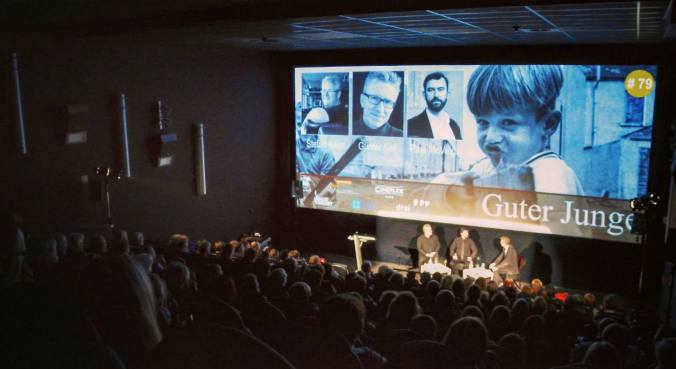
Honoured to have been chosen as one of 40 authors to be part of The International Literature Showcase.
Seeing some great writers on there… representing Northern Ireland Lucy Caldwell, Glenn Patterson, Jan Carson (that I can see so far) and lovely Jenn Ashworth, Andrew McMillan, Max Porter and lots more. Check it out.

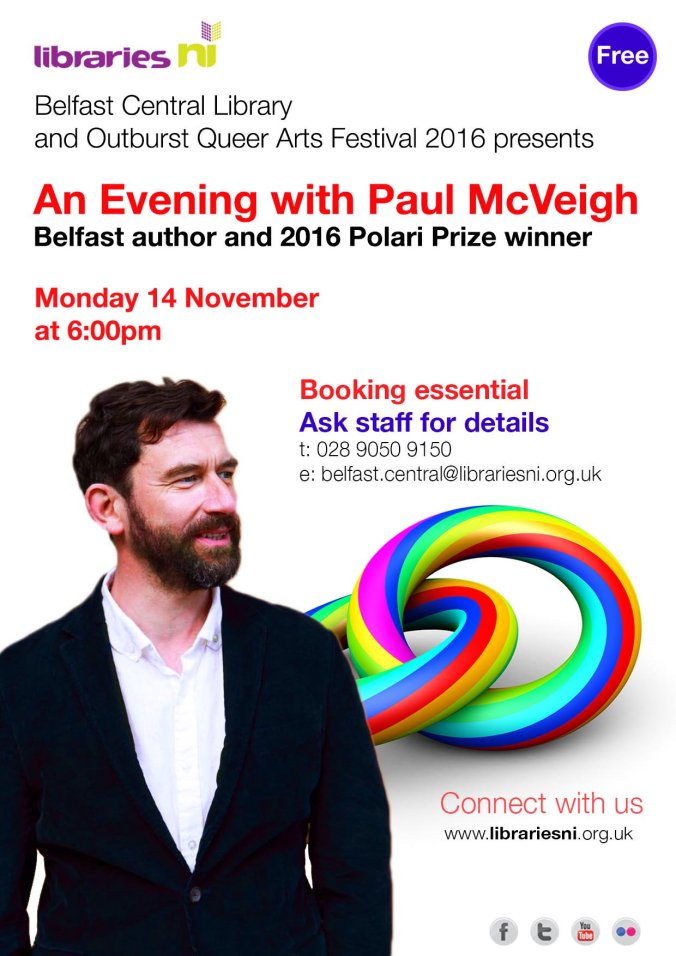
On Monday 14th November The Good Son is being celebrated as part of the Belfast’s Outburst Festival. I’ll be reading and talking about the book in my home city at the Central Library at 6pm – and it’s free!
Have a look at all the events including a visit from the legendary John Waters. I’m on page 63.


(c) John Minihan
My Irish Times interview with reviewer, essayist, RTE presenter and now author Sinéad Gleeson: ‘There’s a huge issue with men not reading books by women’

Sinead at the launch of The Glass Shore in Belfast (c) Paul McVeigh
Here’s an extract…
Sinéad Gleeson’s essays have appeared in Granta, Banshee and Autumn: Anthology for the Changing Seasons. Forthcoming work includes an essay in Winter Papers and a short story in Looking at the Stars. She is working on a non-fiction collection and a novel, and is the editor of three short story anthologies: Silver Threads of Hope, The Long Gaze Back (which won Best Irish Published Book at the 2015 Bord Gais Energy Irish Book Awards) and The Glass Shore: Short Stories by Woman Writers from the North of Ireland (New Island). She presents The Book Show on RTÉ Radio 1.
Paul McVeigh caught up with Sinead at the Belfast launch of The Glass Shore.
Your piece in Granta, Blue Hills and Chalk Bones, which The Irish Times republished, had a huge response online…
I honestly didn’t expect the scale of the response, or the breadth of it. You don’t know how people will respond, and you don’t think about it, you can’t think about that. You’re not thinking about the piece coming out of the tunnel at the end, you’re thinking about just getting it done – the draft and the edits. It was the range of the responses that surprised me, the way people related to different aspects of it. Sure, there were people who had been sick, which I expected, but it wasn’t just people who had my hip or bone problems, it was anyone who had been sick and, on top of that, others who had been religious and had lost their faith, people who had been on pilgrimages – all sorts of people responded to it. A lot of people who’d had terrible experiences with doctors too.
The writer Olivia Laing read it, and she mentioned the section with the cast saw – a few people mention that bit specifically – it really stuck with them, because I suppose it’s quite graphic. I included that bit to get across how the doctor spoke to me, as a frightened kid, and in a way there are parallels with the way the Church spoke to women, that mentality, that powerlessness. Ireland is getting better now but it was so patriarchal for a long time, and it was people in the Church, or in medicine, who held those positions of power, over women, children, the sick and vulnerable. I felt condescended to by religion and by doctors and the two cross over a lot in the piece.
One response that struck me a lot occurred recently when I was in the US, and I gave some classes to students about the work. One guy – who was an athlete – said that after he’d read the opening paragraph of Blue Hills, he spent half a day lying on the floor thinking about how his heart keeps on beating, and that his body does all these things without him thinking about it. So I made some poor American jock have an existential crisis about his own mortality! I guess he hadn’t read work like this before, or known where to find it, and I was fascinated to hear the effect that that one paragraph had on him.
Last year, I became ill suddenly. It was a long process or recovery. It changed me dramatically. One of the ways was how I felt that my body had betrayed me. I could no longer trust it. And there was now a separation between mind and body, not one unit but these co-dependents who weren’t on good terms.
You probably relate to this a lot – do you know that Susan Sontag line I quoted in the piece, about the kingdom of the sick and the kingdom of the well? It’s from her essay Illness as a Metaphor. If you’ve ever been sick and you talk to somebody else who’s been ill, you’re teammates, you have this shared experience. But if you meet a person who’s never been seriously unwell, or never spent time in hospital, never had a blood test, they don’t relate and they don’t realise how lucky and fortunate they are. It’s two different camps. People who’ve been ill hold what Sontag calls “dual citizenship” of both kingdoms.
You can read the rest of the interview here.
Congratulations to KJ Orr who has won the BBC National Short Story Award tonight. Supremely talented and one of the loveliest people you’ll meet. Here’s an interview I did with her for The Irish Times about her wonderful collection ‘Light Box’.
You can listen to the story here.
You can read it here.

A week today, one of these six books will be named winner of The Polari First Book Prize 2016. The writer will receive a trophy and a cheque for £1000.
‘Blood Relatives’ – Stevan Alcock (Fourth Estate)
‘Sugar and Snails’ – Anne Goodwin (Inspired Quill)
‘Trans’ – Juliet Jacques (Verso)
‘Different for Girls’ – Jacquie Lawrence (Zitebooks)
‘Physical’ – Andrew McMillan (Jonathan Cape)
‘The Good Son’ – Paul McVeigh (Salt)
You can come along to find out if I won. The announcement will be part of a Polari salon showcasing readings by Namita Chakrabarty, North Morgan, Alexis Gregory and Amy Acre.
I hope to see some of you there. Fingers crossed for me.

I’m looking forward to the first Shrewsbury Literature Festival. On the Friday 25th November I’ll be interviewing Jonathan Coe about his new novel Number 11 in the festival’s first ever event. Here’s the info…
“Jonathan Coe is SFL’s first Patron and we are delighted that he will be with us over the Festival weekend. He is the author of numerous novels, including “What a Carve Up!”, “The Rotters’ Club” and the Shropshire-based “The Rain before It Falls“.
Jonathan was born in Birmingham and spent many happy childhood holidays in Shropshire. He tells us that he is looking forward to returning to Shrewsbury for the festival in November.
Jonathan’s latest novel is “Number 11” and he will be discussing this book and many other things with the writer, Paul McVeigh, in our very first event!”
On Saturday 26th November I’ll be running a writing workshop and then reading from and talking about The Good Son at 5pm.
I hope to see some of you there.

My author interview series for The Irish Times continues with Anakana Scholfield multi-award-winning author of Martin John and Malarky.
To read the interview click here.

Donal Ryan: ‘To be honest, the reason I became a writer was to impress my wife’
I interviewed novelist and short story writer Donal Ryan for The Irish Times. He talks about writing and his new novel All We Shall Know. You can read it here.
Donal’s first published novel The Spinning Heart was shortlisted for International IMPAC Dublin Literary Award, won The Guardian First Book Award, the EU Prize for Literature and Book of the Year at the Irish Book Awards. The Thing About December was shortlisted for the Kerry Group Irish Novel of the Year and his short story The Slanting of the Sun won the Writing.ie Short Story of the Year Award.