Secret Library Podcast

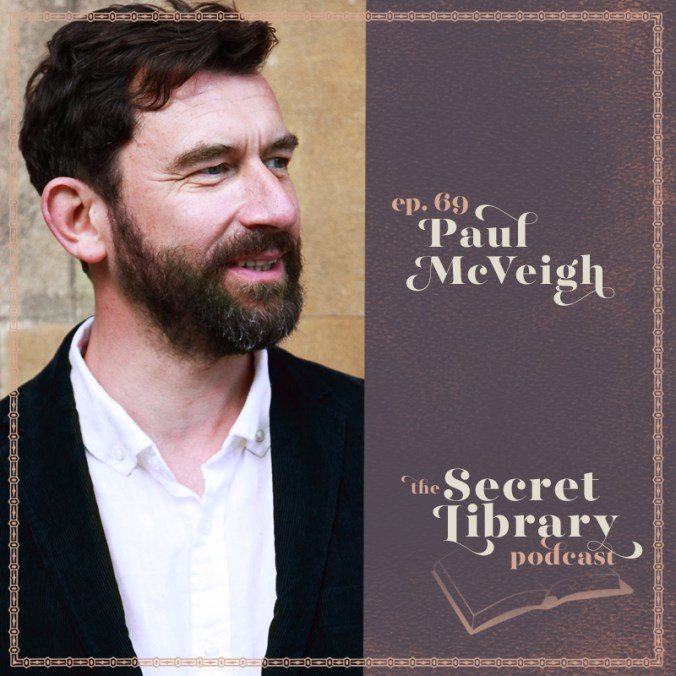
Recently I did an interview with writer Caroline Donohue and you can listen to it as of today. Caroline asked excellent questions and we had a great chat – I talk far too much! Here’s what Caroline says on her site. I hope you enjoy it.

The Secret Library

Paul McVeigh wrote a story in an afternoon that took twenty years.

How is that possible? We gather images over time, trying to figure out how they fit together. Paul had pieces of a story that didn’t quite fit until suddenly, they did. And then the story came out almost all at once in a single sitting. How do you know when it’s time to write a story? And how do you know when to give up on an idea? These are questions that have plagued so many writers and my clients. Paul was the perfect person to discuss them with. Having written fiction, theater, comedy, and a writing teacher himself, Paul has a breadth of experience and a sensitivity to this topic that will blow you away. His debut novel, The Good Son won countless awards and becomes a favorite of everyone who reads it.

This conversation was both deep and funny, an incredible dive into the places where writing comes from and how to know when you’ve got a story that won’t let you go. This promises to be one you’ll listen to more than once. I have been waiting and waiting to share this one! I’m so glad it’s time for you to hear it.

Discussed in Episode 69 with Paul McVeigh:

  • Turning the original short story into the novel The Good Son | Mentioned: Article about the process on Paul’s blog
  • How ideas evolve into stories
  • Getting clear about what is meant and how people often say things to cover up what they mean
  • Writing for the stage and what it taught Paul about dialog
  • Why you’re bananas if you don’t keep a notebook
  • The elements of the story Paul wrote in an afternoon after pondering for 20 years
  • Collecting three distinct elements to build a story
  • Creating a story that is the duration of a hug
  • Stephen Johnson’s spark file
  • Why good writing is never wasted
  • Paul is waiting for this ability to match his intention
  • Being a risk-taker as well as a writer
  • The real question: What will possibly go wrong if I give it a try?
  • Making friends with the best writers and how this will help your own work
  • Connecting by going in with an offer, not with an ask
  • Find writers who are better from you and learn from them
  • How working with actors helped him find meaning behind the dialogue
  • Turning the short story into a novel
  • Writing with a child as protagonist
  • How writing about the Troubles in Ireland forced Paul to relive that time
  • Going deep with your writing so it becomes more universal
  • Learning to look back with kindness and forgiveness
  • The importance of intention in writing
  • Basking in having completed the book.

The Good Son 3rd Editon

Buy Here

Winner of The Polari Prize

“Pungently funny and shot through with streaks of aching sadness.” Patrick Gale
“I devoured it in a day, but I’ve thought about it for many, many more.” Lisa McInerney
“A triumph of storytelling. An absolute gem.” Donal Ryan

Extra Date in Melbourne Added

What Every Debut Novelist Needs to Know

Prepare for your upcoming publication and give your debut the best chance for success.
In this workshop, you’ll discuss how to keep momentum going once your book is out in the world. This talk will give you the key do’s and don’ts from a master communicator and award winning novelist.
You will learn
how to make that debut stand out
how to plan ahead for the day they get that book contract
how to prepare for publication day and
how to kickstart new interest in your novel

About Paul McVeigh
Paul McVeigh’s debut novel, ‘The Good Son’, won The Polari First Novel Prize, The McCrea Literary Award, was Brighton’s City Reads 2016 and part of the UK’s World Book Night 2017. His short stories have appeared in journals and anthologies, on BBC Radio 3,4 & 5 and he is the founder of London Short Story Festival. His work has appeared on TV, on stage in London’s West End and has been translated into 7 languages.
This workshop is made possible with the generous assistance of Culture Ireland and the Arts Council of Northern Ireland.

Cancellation Policy
Venue:

176 Little Lonsdale Street
Melbourne, VIC 3000
Australia

Date: 20 November 2017 – 6:00 to 7:30 PM
Rating: Emerging

The Good Son 3rd Editon

Buy Here

Winner of The Polari Prize

“Pungently funny and shot through with streaks of aching sadness.” Patrick Gale
“I devoured it in a day, but I’ve thought about it for many, many more.” Lisa McInerney
“A triumph of storytelling. An absolute gem.” Donal Ryan


Working With Your Heroes

It’s been an amazing year so far. I’ve appeared on panels with two of my heroes – George Saunders on BBC Radio 3 and Anne Enright at Livre sur le quais – and now I’ll be in three events with Claire Keegan at Singapore Writers Festival. I can’t wait.

Lyrical Éire: An Irish Night Of Words And Music

DATE / TIME: 3 Nov, Fri 8:00 PM – 9:30 PM

VENUE: The Arts House, Chamber
With Cat Brogan, Deborah Emmanuel, Abby Oliveira, Deirdre Sullivan, & Julian Gough and Claire Keegan.
 

The pipes are calling… Irish writers, performance poets and musicians will gather for a bewitching evening of sonorous voices and beautiful turns of phrase. Six Irish artists will be joined by two Singaporean writers as they celebrate the magic of Ireland. The evening will be graced by Irish Ambassador Geoffrey Keating.

Between Brexit and the Deep Blue Sea: Being Irish in a Divided Europe 

Panel Discussion – with Cat Brogan and Claire Keegan.

DATE / TIME: 4 Nov, Sat 11:30 AM – 12:30 PM 

VENUE: National Gallery Singapore, Ngee Ann Kongsi Auditorium

The future will see Ireland geographically separated from the rest of the European Union by a post-Brexit Britain. Meanwhile, the refugee crisis and various causes of socio-political unrest continue to put pressure on an increasingly divided Europe. Where do the Irish see themselves in this volatile landscape? Two fiction writers and one performance poet discuss the impact of such upheavals on their writing, and how issues of migration, asylum and integration seep into their works.

Grace In Gravity: The Craft of Characterisation and Setting

DATE / TIME 5 Nov, Sun 7:00 PM – 8:00 PM

VENUE: The Arts House, Blue Room

A young character survives a difficult childhood and attains actualisation. That is the story at the heart of acclaimed novels and novellas by authors Claire Keegan, Deirdre Sullivan and Paul McVeigh. The three Irish writers will talk about the formal elements of their works, from characterisation to the evocation of mood and setting.


Me and Claire Keegan

I interviewed Claire Keegan at Belfast Book Festival, Cork Short Story Festival and London Short Story Festival . This will be the first time I’ll be joining her as an author.


Celebrating the German Translation of The Good Son

Paul McVeigh & Hans-Christian Oeser at Germany@Home

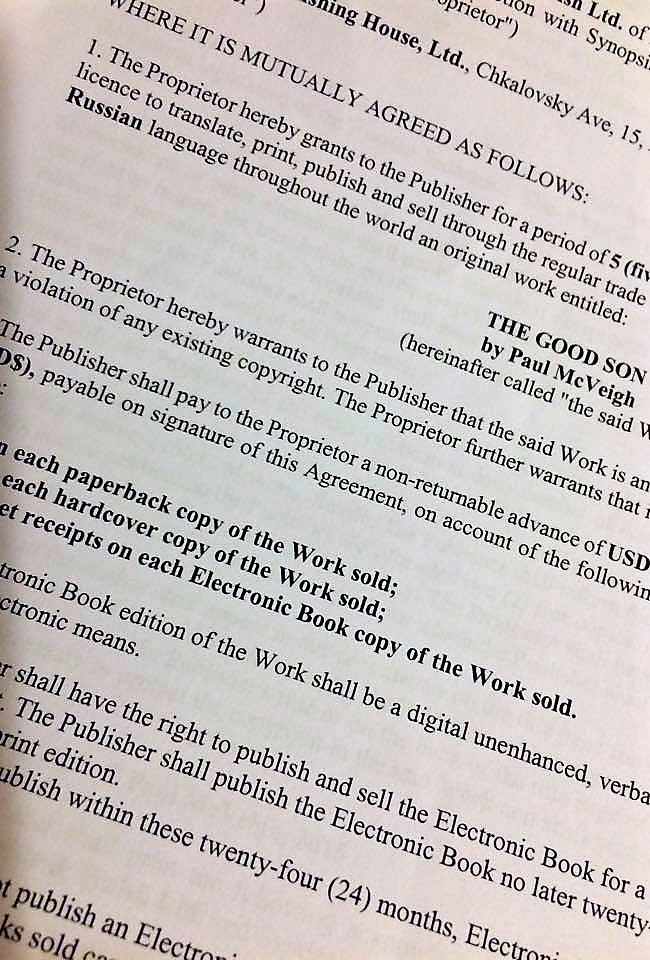
I will be reading in the series Germany@Home on 29th September 2017 at 19:00. The Goethe Institut Irland has invited me and my German translator to discuss the book in Dublin. Guter Junge is published in Germany by Wagenbach.

“McVeigh is writing with warmth and humor about a time of poverty and violence. His two translators Hans-Christian Oeser and Nina Frey were able to transfer this tone of voice wonderfully into the German translation.”

Admission is free, booking essential via Eventbrite: Paul McVeigh & Hans-Christian Oeser

Language: English
+353 1 6801120

Goethe

Guter Junge

“Told vividly and with grim humour… McVeigh’s lush and, against all probability colourful novel from a black and white world bears the utopia that even in dark times, the hope can not be defeated.” Die Welt

Biggest Book Group in the Country Reads The Good Son

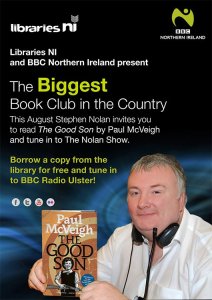
The Biggest Book Club in the Country is back with Paul McVeigh’s ‘The Good Son’

Stephen Nolan

So the Stephen Nolan in Ireland has chosen The Good Son as its latest read. I went into the BBC studio in Belfast to record a few minutes and you can head over and listen to it here.

Thanks to Pedro Hughes and Libraries NI too for recommending The Good Son.

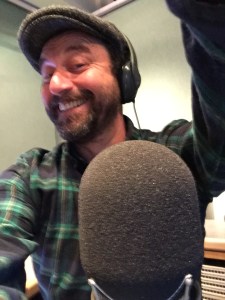
This was me in Stephen Nolan’s chair recording the extract- I got a kick out of that.

IMG_7713

You can join in by getting one of the 300 copies of the book that are being sent around libraries in NI or buy it here…  or below.

The Good Son 3rd Editon

Buy Here

Winner of The Polari Prize

“Pungently funny and shot through with streaks of aching sadness.” Patrick Gale
“I devoured it in a day, but I’ve thought about it for many, many more.” Lisa McInerney
“A triumph of storytelling. An absolute gem.” Donal Ryan

Appearing at Ubud Festival in Bali

Ubud

I’ve always wanted to go to Bali and I’m excited to be travelling there this October for the Ubud Writers and Readers Festival.

My first event is a workshop: A Competitive Edge on October 26th.

“How do you get the attention of agents and editors? How is a story selected from hundreds of competition entries? Paul McVeigh has been on both sides – a writer who now judges international competitions. In this workshop, find out what judges and editors look for and how to avoid the rejection pile.”

My main event, Dazzling Debuts, in on my birthday – October 27th.

“You get one chance to make a first impression, and these authors did so with a splash! They take us on the journey from unpublished hopeful to bestseller lists, film deals and award ceremonies, and dare to take a look ahead at meeting the expectations that come with a dazzling debut.”

I’ll also sit on a panel on class The Last Taboo? on October 28th.

“Why is class such a taboo topic in the 21st century? It remains deeply embedded in most societies, yet many of us deny its existence with rhetoric around equal opportunity or meritocracy. Three writers who dare to speak its name take stock of how class plays out in their writing lives, both on and off the page.”

This trip is with the help of…Print

Print


Writing My First Short Story & Working Class Voices

(This essay was first published in The Irish Times when my novel The Good Son was their book club choice.)

Reading What I Did on My Summer Holidays again was an unsettling experience. A peeking-through-your-fingers cringing you get looking at early work and the realisation that this was the beginning of a journey that would lead me here, a mind-boggling 17 years later. I lost this story when a hard drive got corrupted many years back, in fact, I lost the first draft of the novel at the same time. I was so disheartened I took a long break from writing and had to begin the novel again, from scratch, years later.

Being my first attempt at prose, never mind a short story, I now see the gaps and failings. I’d never even read a short story before writing one. Back then I was writing comedy shows in London, had done a little for TV and was teaching comedy sketch writing at Hampstead Theatre. After seeing one of my shows, author P-P Hartnett got in touch asking me to submit to a short story anthology he was editing. I hadn’t written prose since my essay What I Did On My Summer Holidays at school – most of this I’d invented to make me look good. So when I sat down to have a go at writing a short story I took the most common advice I’d heard – write what you know. I thought about the last time I’d written and used that title as a little wink to it. I thought of a moment in my childhood, on a visit to my Aunt’s, and used that as an intention. I had reached the word limit before I’d gotten to the lane up to my Aunt’s house – this was the moment the idea this story could become a novel first occurred to me. None of the action I’d written was autobiographical though the arena was. I edited down this chunk and added a fictionalized version of the scene I had originally intended at my Aunt’s. Most importantly, it was Mickey’s voice that came out. He’s been here ever since. Though he stays the same age and size in my head, like Bart Simpson, his personality has changed over the years. Mickey got craftier, funnier, dafter, stronger and braver with each draft of The Good Son.

The story got accepted by the editor, was published. I went on a mini-tour of Waterstones shops in the UK and Ireland. Bizarrely, I read in Waterstones Piccadilly, with whom I would later develop an important working relationship, Brighton where I would later live and The Good Son become the City Reads, Dublin where I will come discuss the book with Martin Doyle as a part of the Book Club and Belfast, where of course, the book is set. Never thought about that before – it’s like I’ve been reading one of those weird, cultish books on the power of coincidence.

Mickey is less resilient in this story than he would develop into for The Good Son. Still a thinker but of a different kind. In the novel he has progressed from see how bad it is? to things are bad but I will win. You can see in this story that although Mickey has flashes of humour, the overall tone is more sombre than in the novel and hints at darker stories underneath – for those of you who haven’t read The Good Son, the novel turns up the volume on the funny. Writing comedy for years made me want to write something dark. To swim in that part of me. I explored those darker stories in the first drafts of the novel and it was a very different book to the one that was published.

I left writing comedy not too long after this story and by the time I was doing the major re-writes about 4 years ago I had lost my need to distance myself from the comedy world and was ready to embrace it again.

I edited a huge amount of swearing out of the story for publishing here but there’s still quite a bit. The swearing wasn’t in there to shock but to address what I saw as the omission of swearing children in books. This runs closely with the absence of working class voices. I contend that Ireland has more working class writers and themes than the UK.

On the streets of Belfast, in the working class sectarian ghettoes of my day, swearing punctuated every sentence. Think of the movie portrayals of the Italian ghettoes of New York and you’re getting close. Of course, it’s related to working class culture. The obvious reason for this would be lack of education but it’s more complex and more powerful. It’s a badge of honour. We are happy as we are. Integrating swearing into everyday parlance is a literal fuck you to those who have – be that money or intelligence (really meaning education or the investment in it) or even talent. And as for those of their community who possessed any of these passports – permission to enter the world beyond, a way out – they need to be nifty with their tongue.

It’s not called a class war for nothing, and defecting is a betrayal. Swearing, harsh words, can be a tool of peer repression too, a whip to keep you in line. Perhaps a brutal environment begets a brutal language (also reflected in the harshness of our Belfast accents?) and a brutal socialisation. This is glimpsed in the story and explored in more depth in the novel. If you adapt how you speak – stop the swearing, for example, or speak softer, expand your vocabulary, use correct grammar – then you are rejecting your people, rejecting what your community stands for. You are saying the other world is better, that you aspire to have. If it is a world where excelling at harshness makes you a winner then being soft, believing in gentleness and kindness makes you a loser. You will be eaten up or mocked.

But it’s not all doom and gloom. Swearing can be fun. The playfulness I’ve seen in the use of the filthiest of words, especially when coming from the unlikeliest mouth, has created some of my best childhood memories. Playing with the power of profane leads into the role of humour in harsh environments – I know Lisa McInerney is going to talk about this and I’m looking forward to hearing what she has to say. Playing with the harshness of words can take its power away too. Jostling with your friends and family – the Northern Irish slegging is there to keep you humble and thicken your skin. Harsher than slagging, it pushes the boundaries, testing just how much mockery and criticism a person can take before cracking and it often only ends when someone breaks.

A sharp wit can give you a place in this kind of world when brawn, connections or the threat violence are not your disposal. Mickey has that. He needs it.

As I said What I Did On My Summer Holidays was first time. Be retrospectively gentle with me.

(You can read What I Did On My Summer Holidays here.)
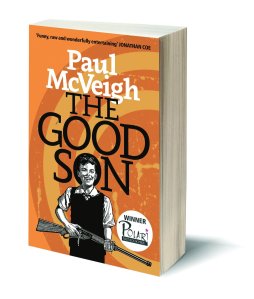
The Good Son 3rd Editon

Buy Here

Winner of The Polari Prize

“Pungently funny and shot through with streaks of aching sadness.” Patrick Gale
“I devoured it in a day, but I’ve thought about it for many, many more.” Lisa McInerney
“Funny, raw and endlessly entertaining.” Johnathan Coe
Reading at Ireland’s Biggest Community Festival

I’ll be reading and talking with Marnie Kennedy at The Duncairn Centre for Culture & Arts in Belfast on August 11. It’s part of Féile an Phobail Ireland’s biggest community festival. I’ll be joined by writer Victoria McNulty and one other writer tbc.

The event is called Scribes at the Duncairn and you can check out the full festival programme here.

I hope to see some of you there.

Féile-logo-web


Venue:  The Duncairn Centre for Culture & Arts, Duncairn Avenue, Belfast BT14 6BP
Time: 6.30pm
Tickets: £6

The Good Son in Gay Literature Celebration

Since winning The Polari First Book Prize The Good Son has featured in WHSmith promotions a number of times and now it will part of the WHSmith celebration of gay literature alongside classics from Edmund White, E.M. Forster, James Baldwin and William Burroughs. You can find the gay literature promotion in select WHSmith UK travel stores from 22nd June – 12th July. Here’s what they say over on their blog where you can also see the other books they’ve chosen…

“50 years ago in July 1967, the Sexual Offences Act decriminalised homosexual behaviour between men over the age of 21 in England and Wales. To commemorate this landmark Act, we’ve put together a list of important gay literature from the past 100 years, including classics, debuts, fiction, non-fiction and anything in-between.”

whsmith

It’s a honour to sit alongside these classics.


Winner of The Polari Prize
“Pungently funny and shot through with streaks of aching sadness.” Patrick Gale
“I devoured it in a day, but I’ve thought about it for many, many more.” Lisa McInerney
“Funny, raw and endlessly entertaining.” Johnathan Coe